
AN ART LOVER’s dream in the heart of toronto: inside the home of jewellery designer, kaja erika jorgensen
Nestled on a quiet street in Toronto’s Summerhill— a neighbourhood celebrated for its historic architecture and tree-lined streets— fine jewellery designer, Kaja Erika Jorgensen, has transformed her historic residence into an art collector’s dream. Known for infusing her work with a deeply personal touch, Kaja translates that sensibility into her own home, through layering antique finds from across the world, and creating a space that feels as intimate and one-of-a-kind as her jewellery designs.
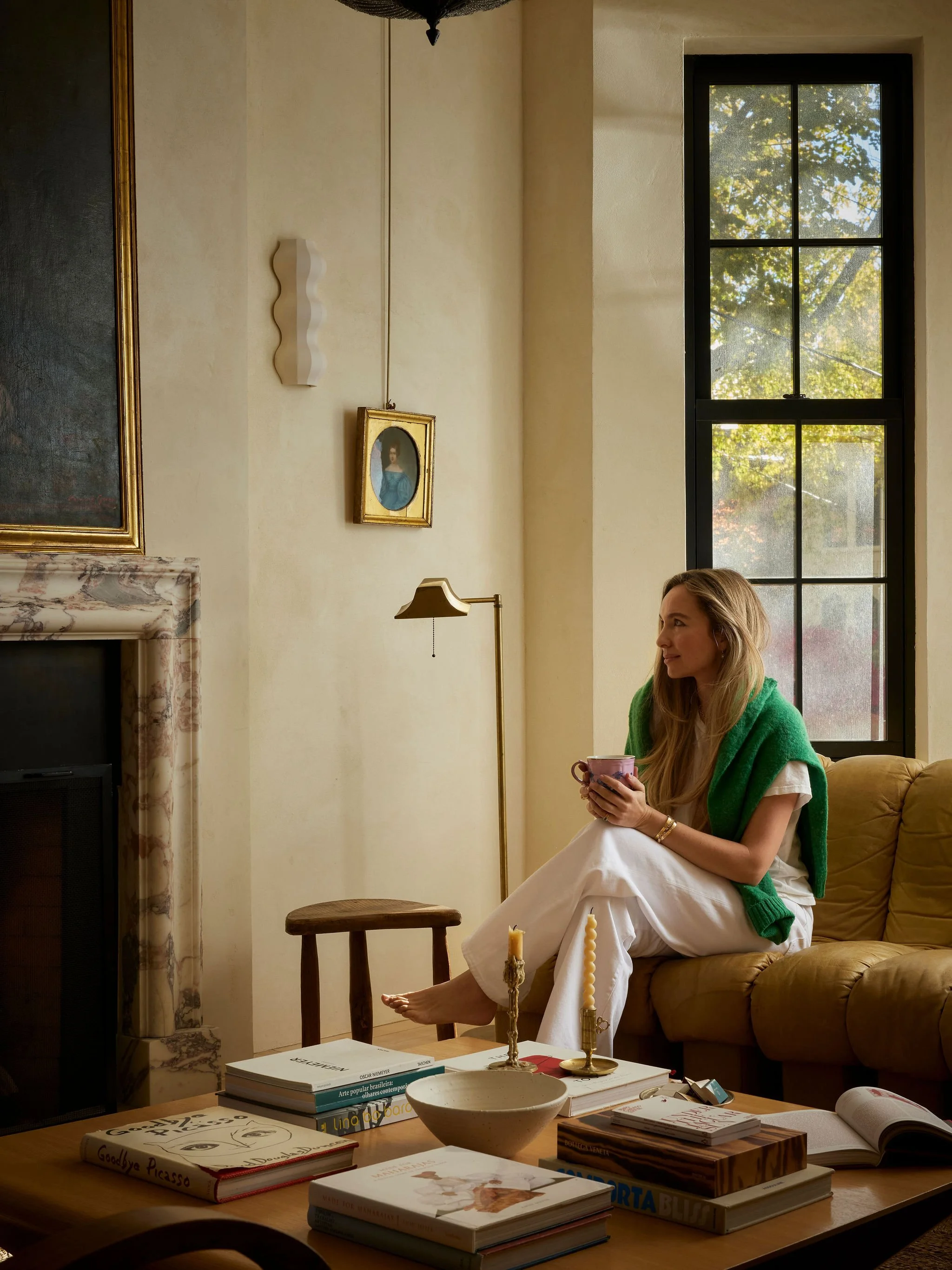
Photography by Lauren Miller | @lomillerphoto
There is something effortlessly beautiful about the world jewellery designer Kaja Erika Jorgensen creates. With an extensive background in fashion, design, and art history, and a childhood spent between Canada and Germany (where her mother is from), Kaja’s sense of style reflects a design eye informed by a love of different cultures and the richness of global design. She shares, “I think all of those years studying the history of art and design, working in archives and doing fieldwork, informs my work today. I am constantly going down rabbit holes researching obscure historical pieces or methods.”
When asked where she draws most of her inspiration from, she explains: “Rio de Janeiro, Stockholm, and the South of France. All of these places have incredible archives of mid century design which is my top inspiration in everything from furniture, to jewellery. My German grandparents lived in a beautiful Bauhaus style home, and I can still vividly remember each room; the art, the heavy Le Corbusier sofa and armchairs, the teak dining room bench. It made a lasting impression on me.”
Her work carries a sense of intimacy. Just as her jewellery pieces are each custom made for their new owner, her home reflects that same sensibility. As Kaja puts it, “I strongly believe that there is no point in having beautiful things and not using them, and I don‘t worry at all about keeping things pristine (much to my husband‘s chagrin). Where is the joy in that? Almost everything, from our light fixtures to our tables and chairs are vintage which means that everything is already worn in to begin with, and thus much more forgiving of minor mishaps. The children have always used the same drinking glasses and plates as us, and honestly there have been very few accidents. I want them to have an awareness of how to be careful and respectful of their surroundings, but also feel the joy of using beautiful items.”
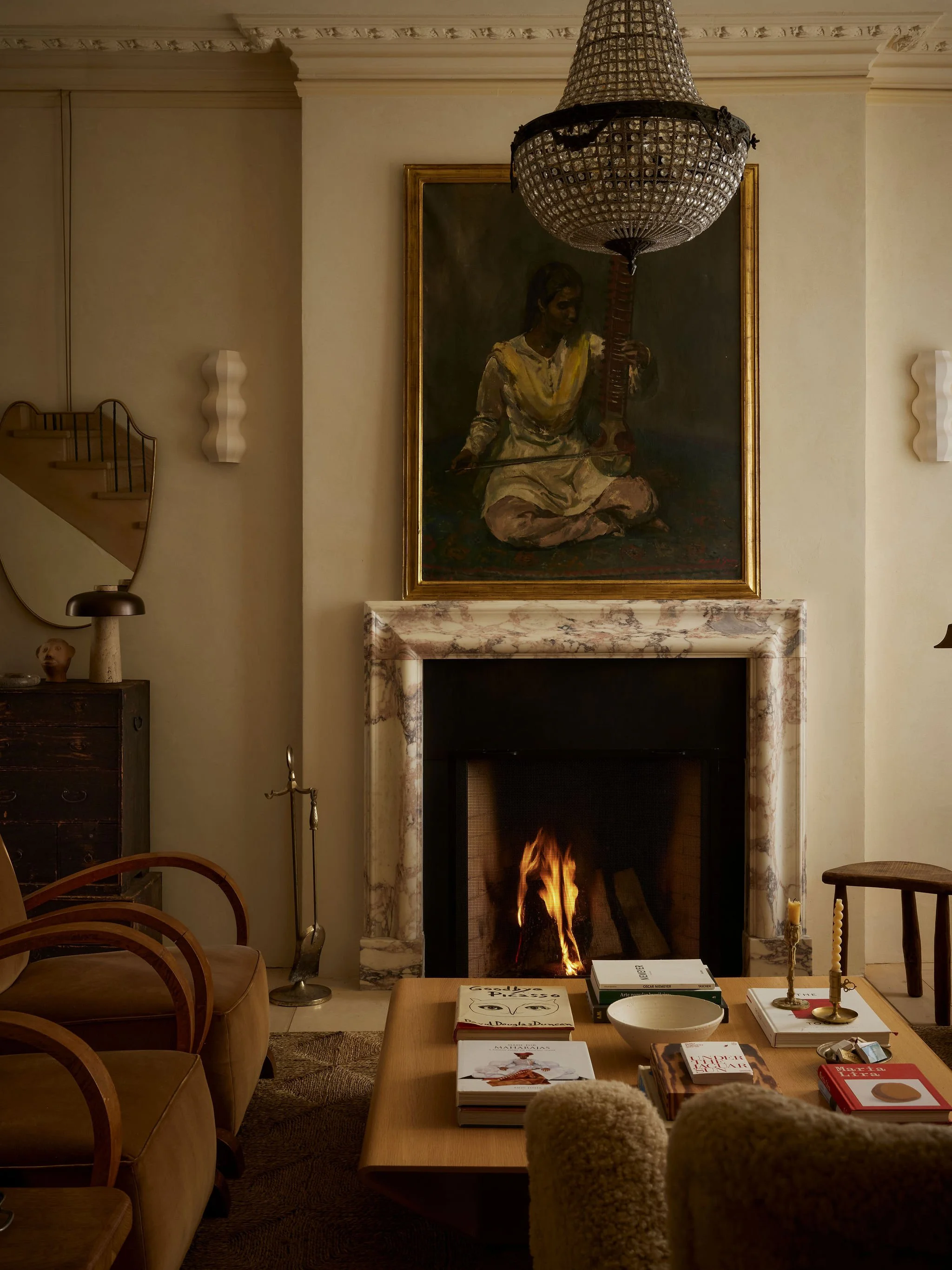
An antique oil painting, gifted by Kaja’s in-laws as a housewarming present, has become a heritage piece for her family and a celebration of her husband’s Ismaili East African heritage.
When searching for a Toronto home, Kaja reflects, “We were looking for a Victorian house to renovate specifically because we wanted high ceilings and an inherent character, but also the freedom to create a space that reflected our taste. Although it needed structural work, this house [built in 1888] had great bones and a garden which we fell in love with immediately.”
Nothing in Kaja’s home feels rushed and it is clear to see that it has become a space assembled with care, over a number of years. Kaja explains, “Our only design direction was that we would not take anything we did not love through the doors and we have been fairly militant about that even if it meant that some rooms felt (and still feel) quite spartan. We took a few Scandinavian pieces from our old house, and have very gradually sourced the remaining furniture from auctions, antique dealers, and Marketplace. It is a slow process, and always evolving”, she says, settling into a vintage shearling armchair, found at an auction in Stockholm.
“I talked my brother into picking it up and keeping it in his apartment while I figured out how to transport it. After many months, we had it packed and shipped here. The chair is designed in such a way that it hugs you when you sit in it, and everyone who tries it falls in love. It’s our favourite place to read stories and cuddle and the children love it too”, she adds.
Kaja wanted the home to feel warm and inviting, and developed a custom plaster colour— a delightful butter-cream shade— that is used throughout the home. She shares, “I am a purist when it comes to materials and so we used only natural stone and wood, as well as raw brass, copper, iron and nickel. The light fixtures I collected gradually over the course of 1.5 years, mostly from auctions in Scandinavia, France, and Italy.”
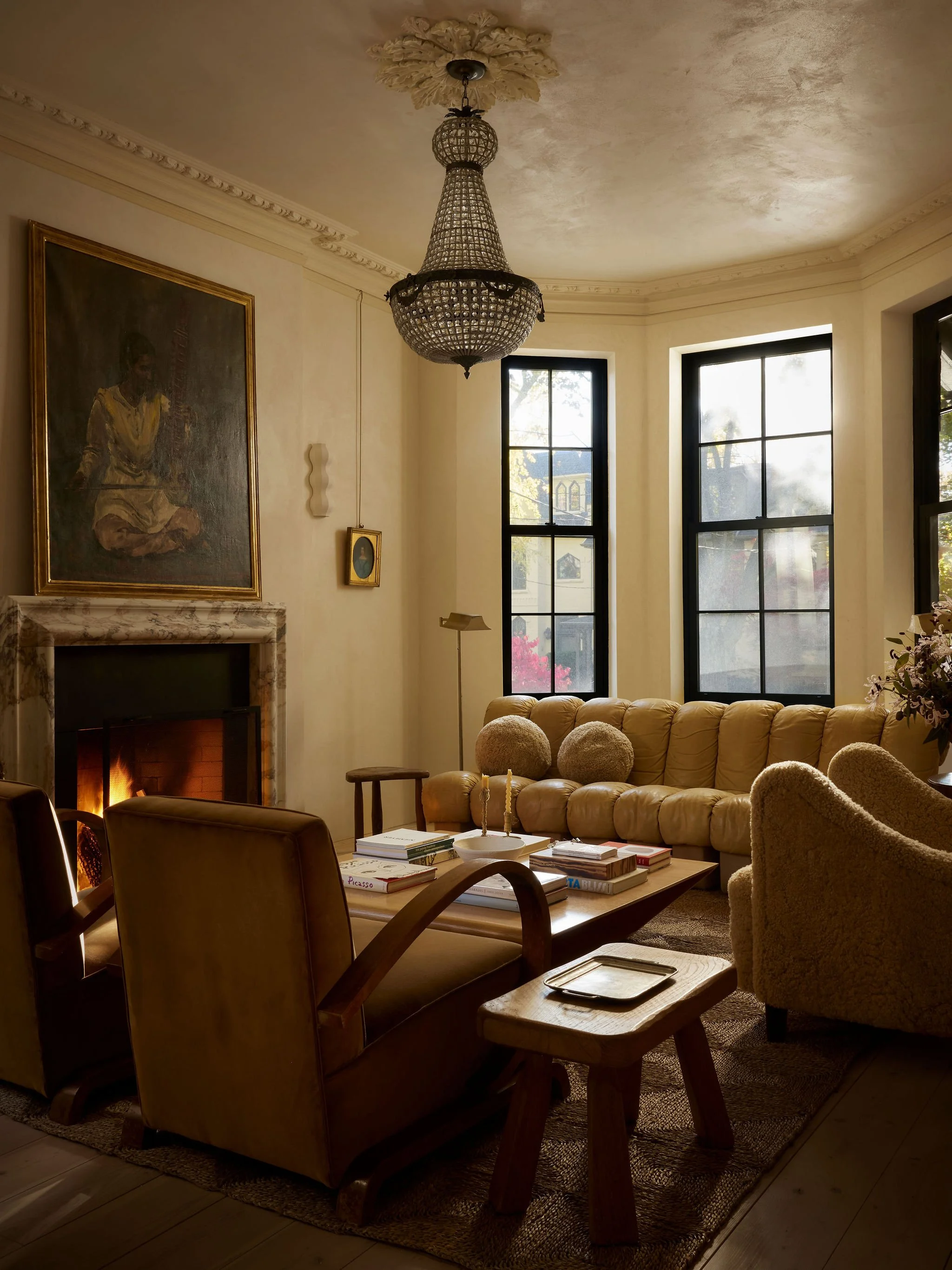
An antique crystal chandelier imported from England by FARRIER, centres the room.
Many of Kaja’s lighting selections are antique or vintage, and have been thoughtfully chosen for their individual scale and materiality. She recounts, “My husband noticed the Egyptian revival chandelier in the FARRIER showroom. We loved how sculptural it is, and eventually decided to buy it for our living room, which had been without a central light fixture for over a year. It ended up being the perfect way to centre the room, while providing a beautiful diffused light.”
Antiques play a defining role in Kaja’s design approach, introducing contrast and depth to her newly renovated home. As Kaja puts it, “I love the tension that is created by adding an antique into a contemporary space. I think you need to be willing to embrace imperfection and trust your instincts when it comes to pieces you love.”
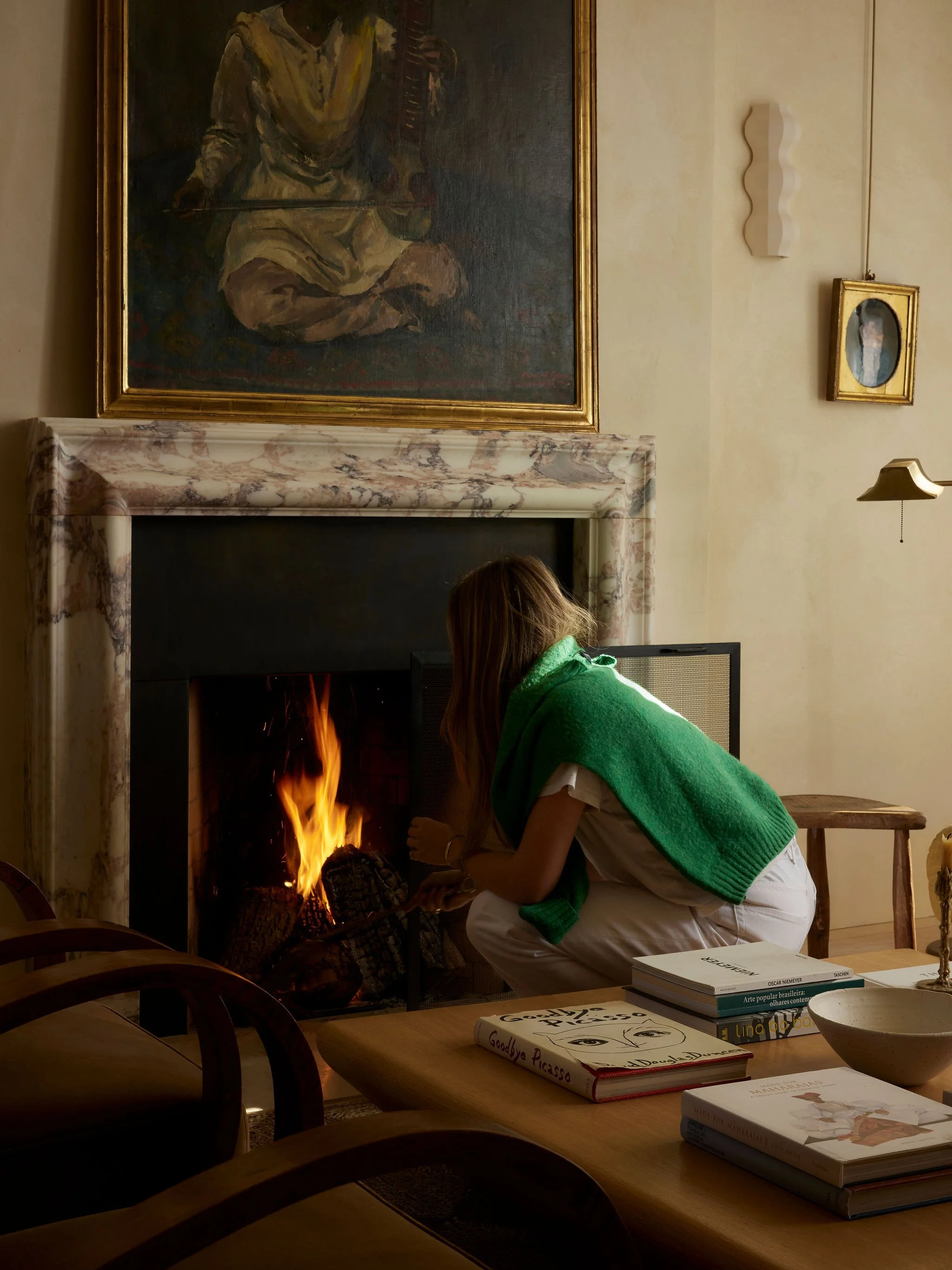
The living room fireplace— a focal point of daily ritual for Kaja and her family through the autumn and winter months. To the right, a small ancestry portrait which has traveled through different corners of the home, now finding its place by the front windows. Just below that, an antique primitive stool, originally from France, imported by FARRIER.
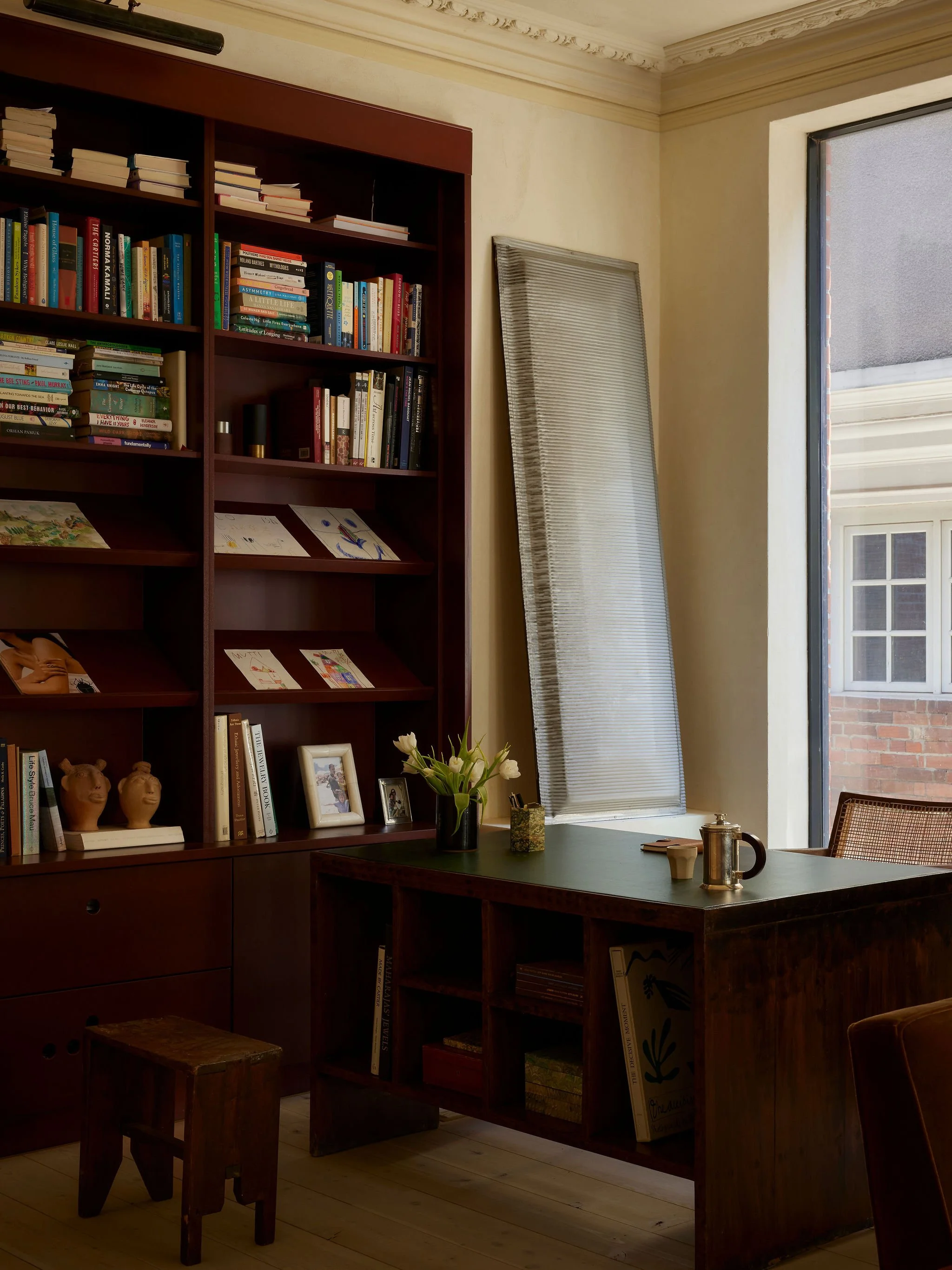
An antique weaver’s stool, imported from France by FARRIER, acts as a perch by Kaja’s workspace— a Pierre Jeanneret pigeon hole desk, alongside a Jean Prouvé aluminum panel displayed as a scuptural piece of leaning art, and a nod to Kaja’s love of mid century design.
Just beyond the living room sits Kaja’s KEJ workspace, an extension of the home rather than a separate studio. Working primarily from home, Kaja welcomes clients into this intimate setting, guiding them through the jewellery design process at a slower, more personal pace. When asked about her creative approach, she shares, “I am always collecting inspiration; I think a creative eye never rests. I do not work on a schedule of drops or seasonal collections, and instead just produce pieces as the ideas come to me, alongside a lot of one of a kind custom pieces. I love using design to tell a story, and fine jewellery offers such an intimate way of doing that." Through this highly considered, small-scale way of working, many client relationships naturally grow into friendships.
Alongside her business, Kaja raises her two children, Isa & Gaïa, and plans her weeks with a deep commitment to work-life balance. The children’s presence is lovingly felt throughout the space— children’s drawings displayed on the shelves beside her workspace, special plates and cups within little arms reach— a visual reminder that creativity and motherhood are not separate.
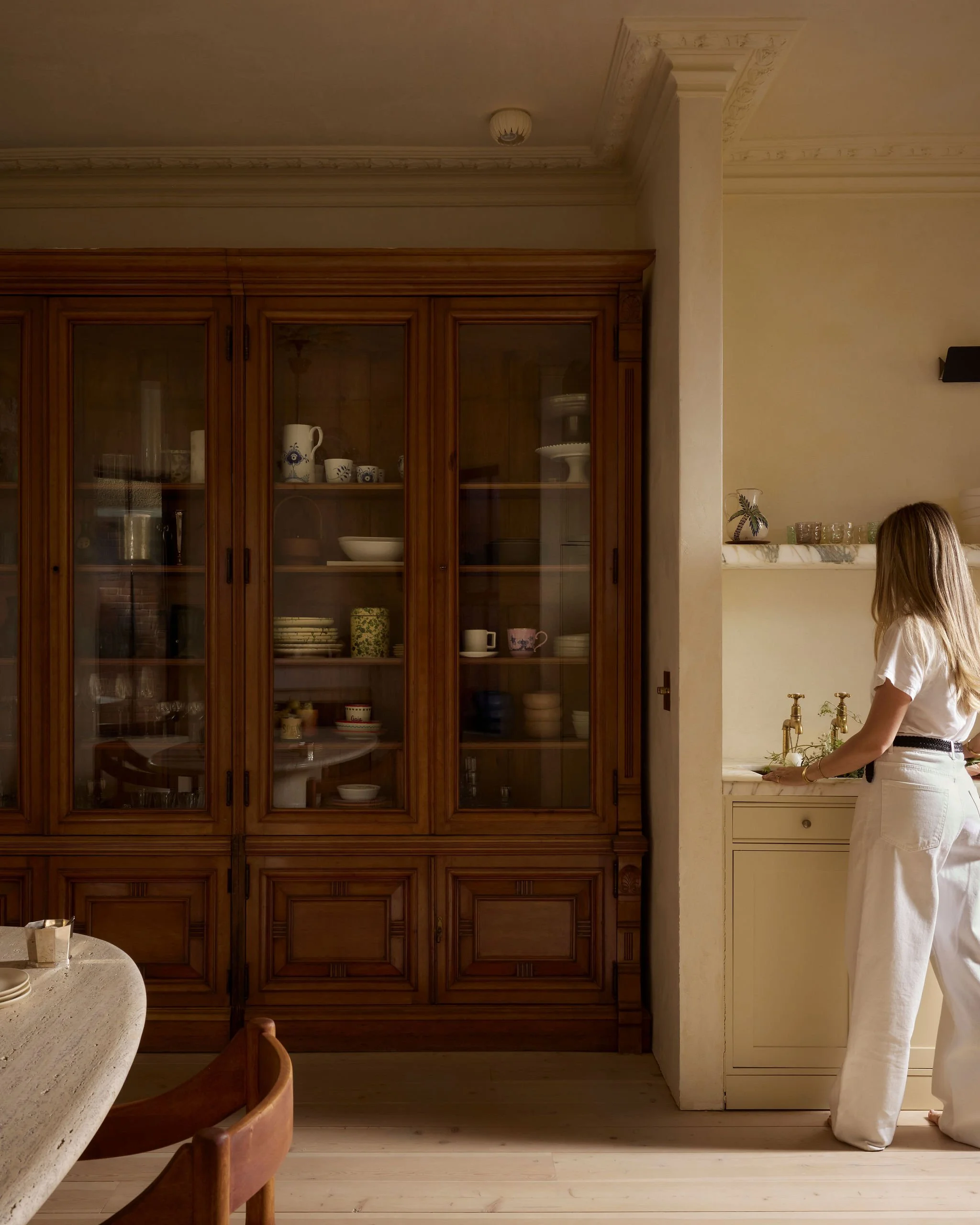
An antique larder cabinet sourced from The Door Store, originally used in a library room in a Beaches home, now used to store the children’s books and art supplies and her extensive collection of ceramics and glassware.
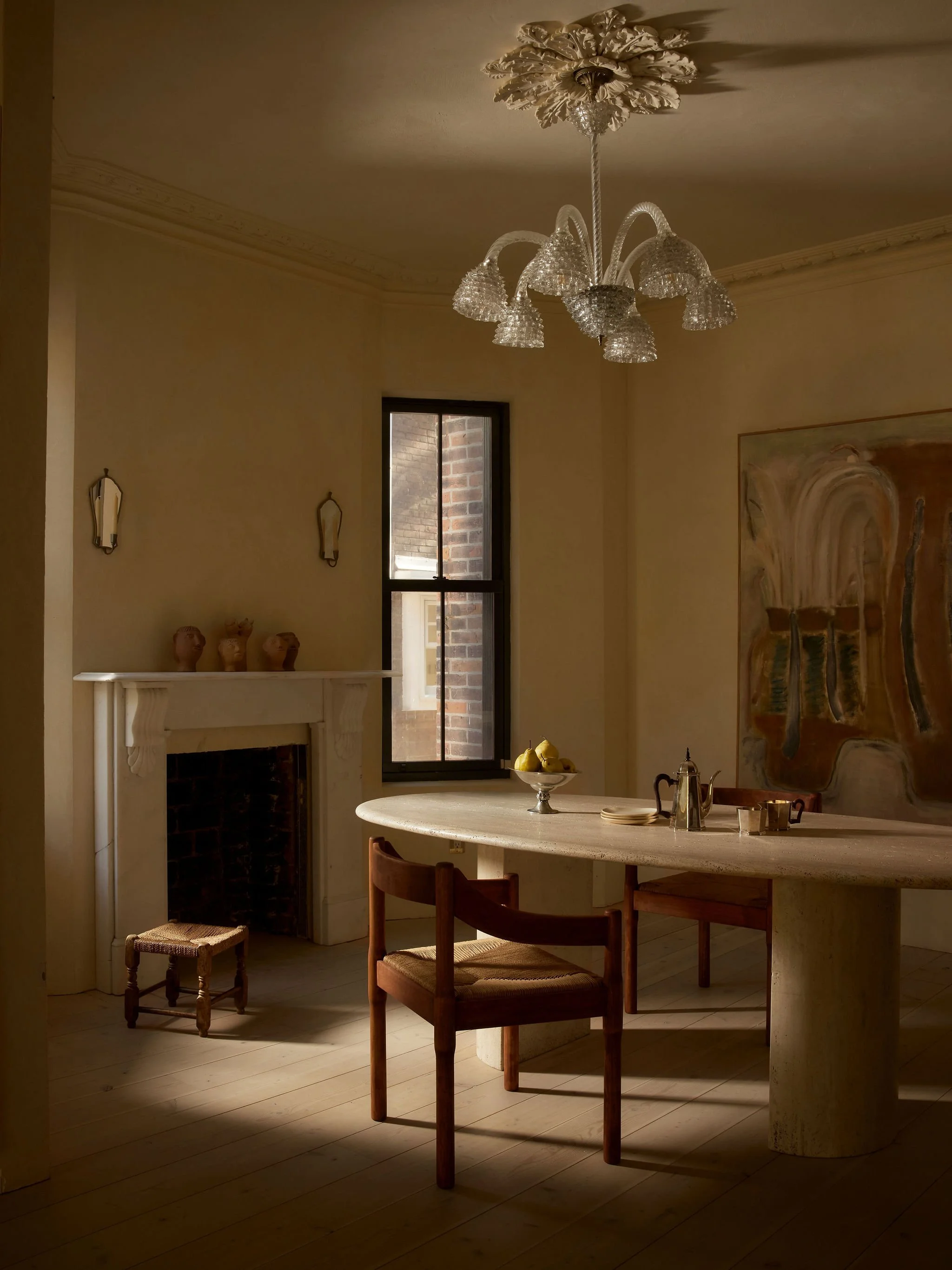
Handmade clay heads adorn the dining room fireplace mantle, imported from Brazil by an artist specializing in religious clay relics. An English woven rush stool, imported by FARRIER, perches by the fireplace. A vast abstract piece by Toronto contemporary artist, Louis Philippe Chapdelaine hangs over the dining table, and a 1940’s Ercole Barovier rostrato glass chandelier centres the room.
Kaja recalls, “One of my professors in design school used to say, ‘We shape design, and design shapes us,’ meaning that the furniture and objects we choose to surround ourselves with influence how we move through the world and mediate our experience. I think about this a lot in regards to our family and what sorts of feelings and rituals I want to foster via our surroundings.”
She remembers, “Recently I found my daughter happily disassembling a late Edo period tansu that is in our hallway, and had a small moment of panic. But when I began to put it back together, I noticed that one of the sliding door panels she had removed revealed a beautiful painting which had been installed facing inwards. It was such a cool discovery and a great reminder of the many stories antique pieces carry.”
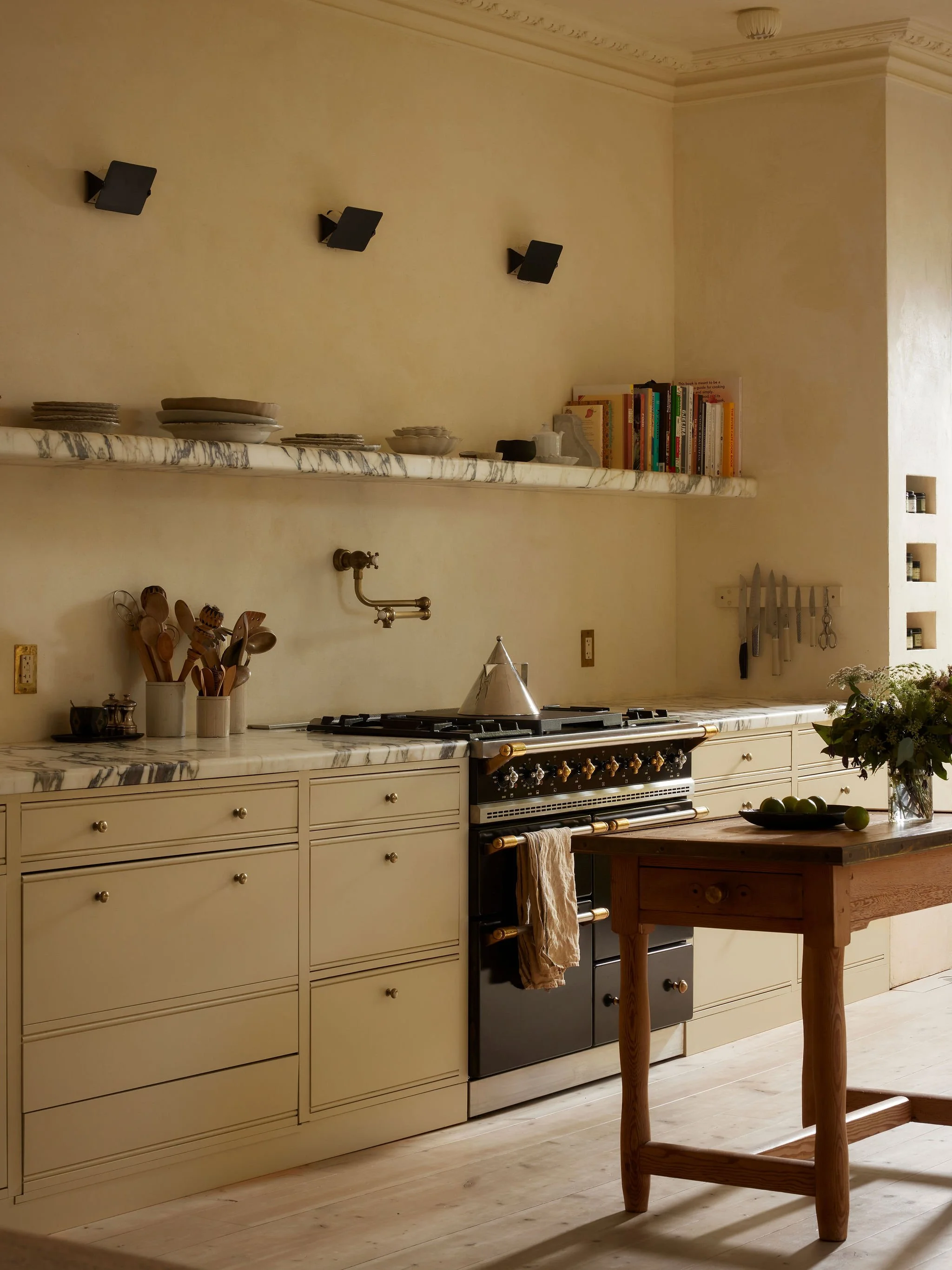
Vintage Charlotte Perriand wall sconces line the upper marble open shelving, sourced at auction. An antique pastry table, sourced by FARRIER, acts as a casual kitchen island.
Kaja prioritizes beautiful vintage choices throughout her home, even if they require a little more creative thinking to install. She shares, “I bought a lot of 10 original Charlotte Perriand wall sconces before we even designed the kitchen, knowing they would somehow make their way into the space. They help soften the overhead lighting and I like their sculptural quality, although they were a nightmare to install since they did not have backplates that meet Canadian standards and I did not want to alter the sconces themselves with a new backplate. We ended up having to improvise by painting metal backplates to match the walls, and securing the fixtures onto those.”
The kitchen is anchored by an antique pastry table she sourced from FARRIER. She explains, “I did not want a kitchen island, but wanted a piece of furniture to break up the open space without taking up too much room. The table had an amazing patina and I loved the brass accents and refined legs which balance out its rustic qualities. It’s small scale felt unexpected in our space, but somehow pulled everything together.”
Today, the table plays host to the rituals of family life: matcha made after the morning school rush, children perched in highchairs chatting away as dinner is on the stove, afternoons spent crafting, and the occasional scatter of Lego building.
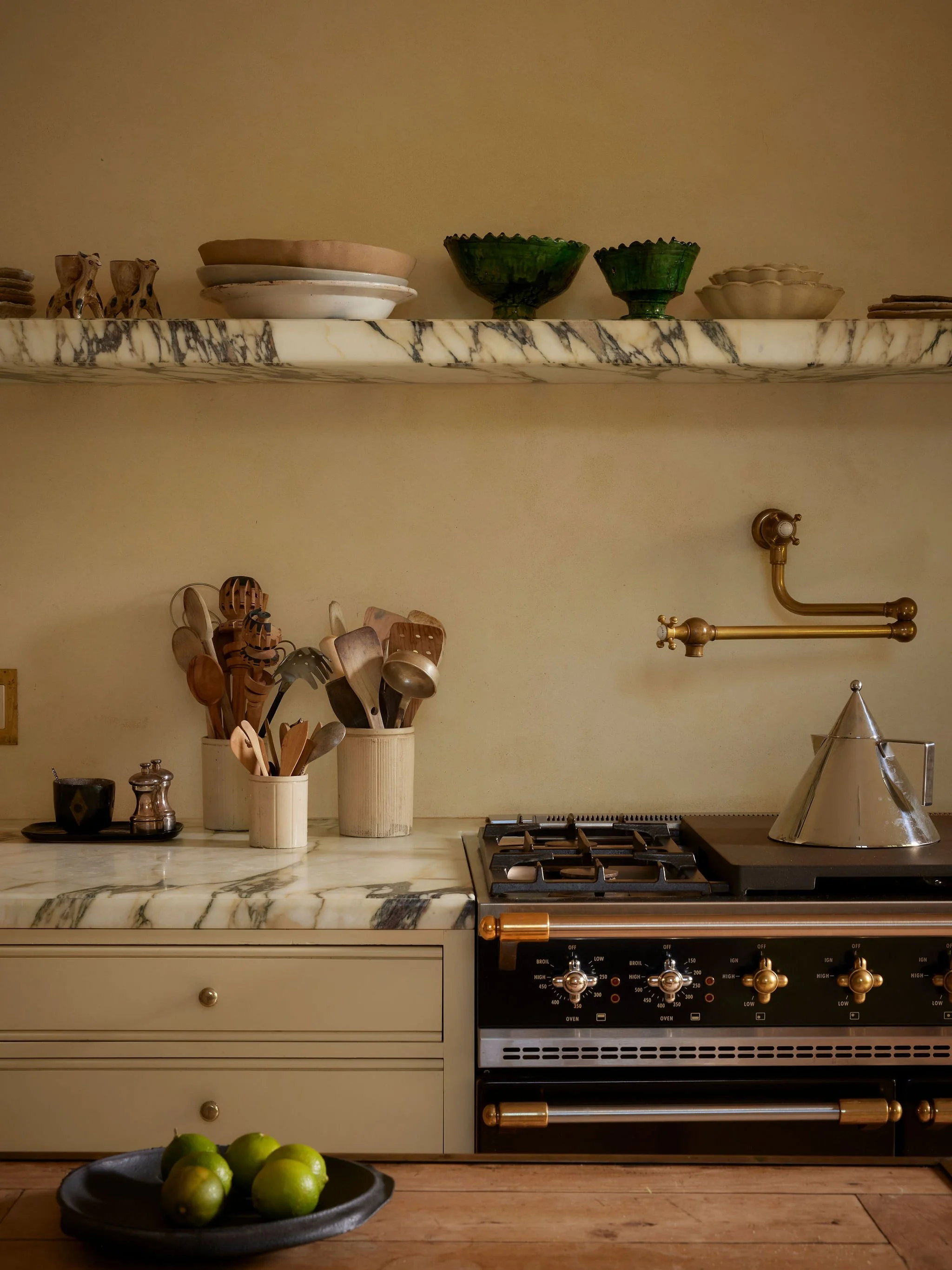
Antique English marmalade pots sourced by FARRIER feel at home on Kaja’s worktop, doubling up as vases, brush holders, and catchalls around the home. An unlacquered brass pot filler is ready to fill a stainless steel Alessi kettle.
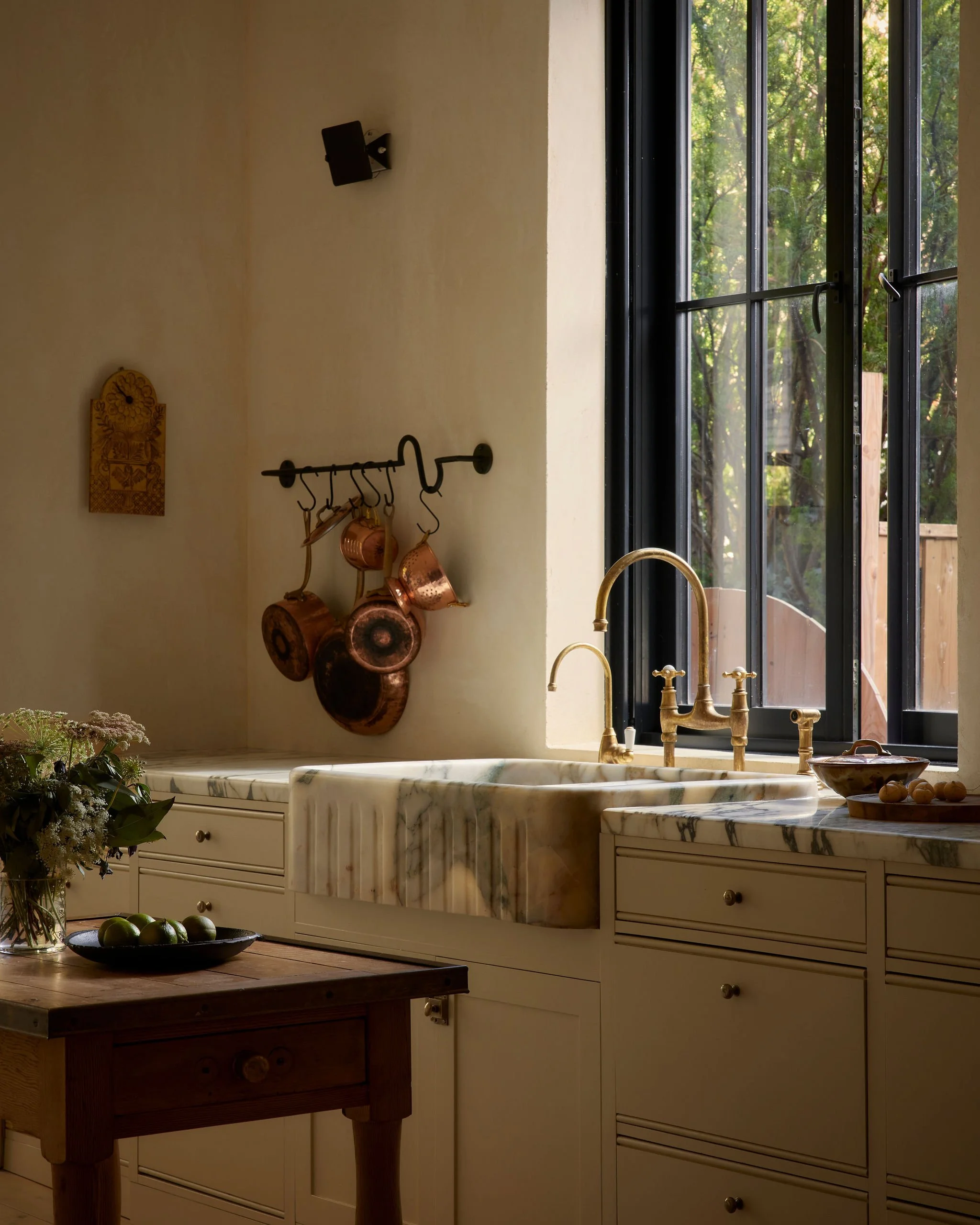
Kaja describes her personal style as “unfussy, layered and a little bit playful.” Kaja shares, “I love natural materials: bare wood, stone, wool, leather, marble. By virtue these tend to be quite neutral, but I actually love colour and have been trying to incorporate more.”
When it came to applying that ethos to her kitchen design, she shares, “The kitchen layout was really dictated by the space— I could visualize it from the minute I walked in. To know me is to know that I am always walking in a room and imagining all its far fetched possibilities— often unsolicited. I have sketches I drew the week we first saw the house, and they look like carbon copies of our kitchen today. I was definitely naïve and I think, in a way, it allowed me to plan the kitchen very intuitively. I thought about wanting to look out of a window as I do the dishes, wanting to cook out in the open without a heavy vent hood bearing down on me overhead, and wanting to make and drink my morning coffee while looking at the garden. That being said, I have always loved the look and feel of traditional British kitchens and had been saving inspiration from deVOL and Plain English for ages, which greatly influenced me. So it made perfect sense when I fell in love with the old British pastry table at FARRIER.”
The finished kitchen reflects Kaja’s aesthetic instincts— thoughtfully composed yet relaxed, timeless yet adaptable, and shaped by materials made to be lived in.
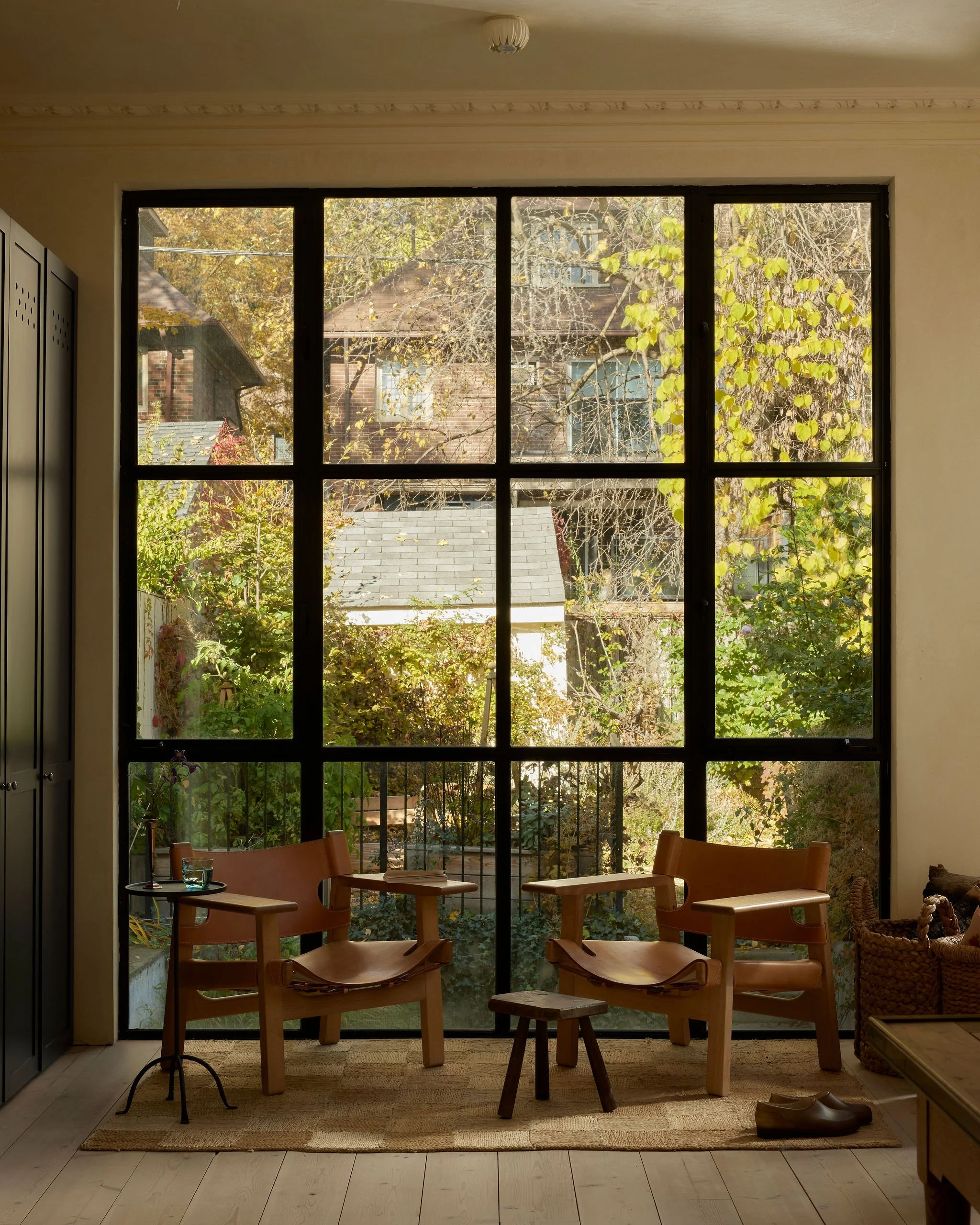
A pair of Spanish Lounge Chairs by Børge Mogensen perch by the floor to ceiling windows, looking out at the Toronto backyard. An antique primitive stool, sourced from France by FARRIER, acts as a footrest after an afternoon spent gardening.
When asked about a design decision Kaja quietly loves, she reflects, “The Spanish chairs by the kitchen windows are a particular favourite daily spot for me. Most mornings the children hang out there to watch the rabbits and birds in our garden, while balancing their breakfast plates on the armrests.”
Kaja’s home is an ongoing conversation between old and new, work and family. At it’s core, the home reflects a patient, intuitive approach to design— rooted in sustainability and enriched by the homeowner’s appreciation for art, design, history, and family. Kaja’s home is both highly considered and deeply lived in and enjoyed.
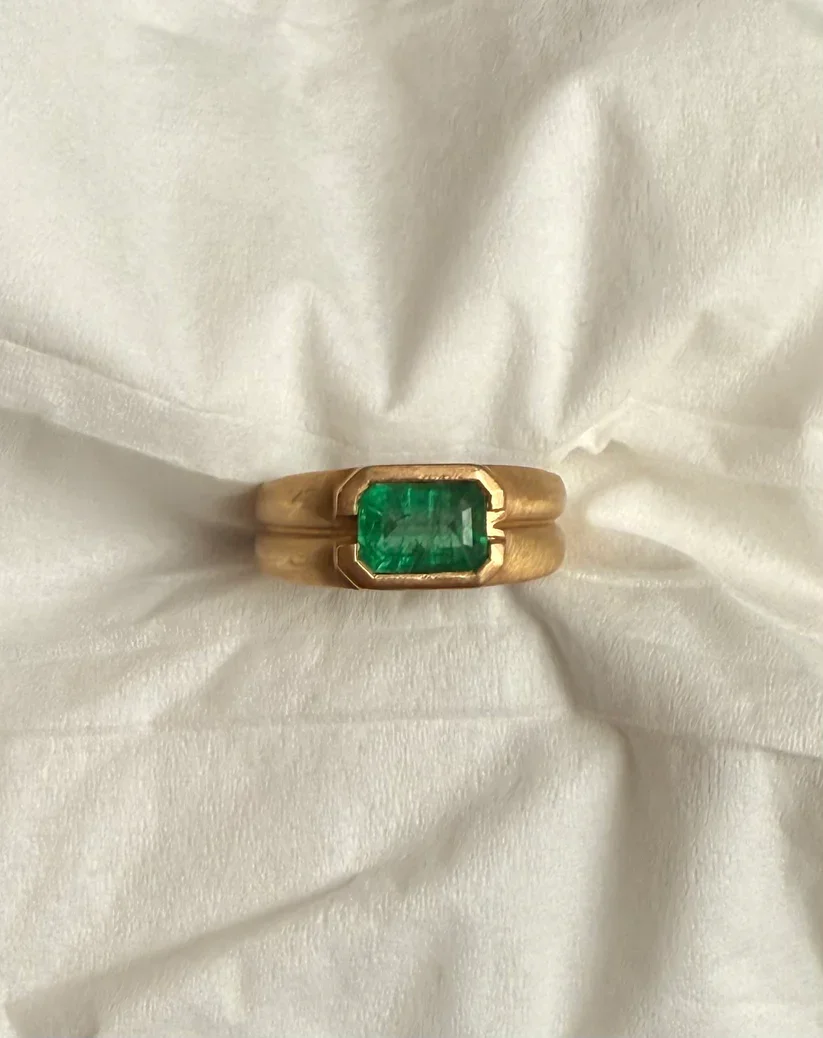
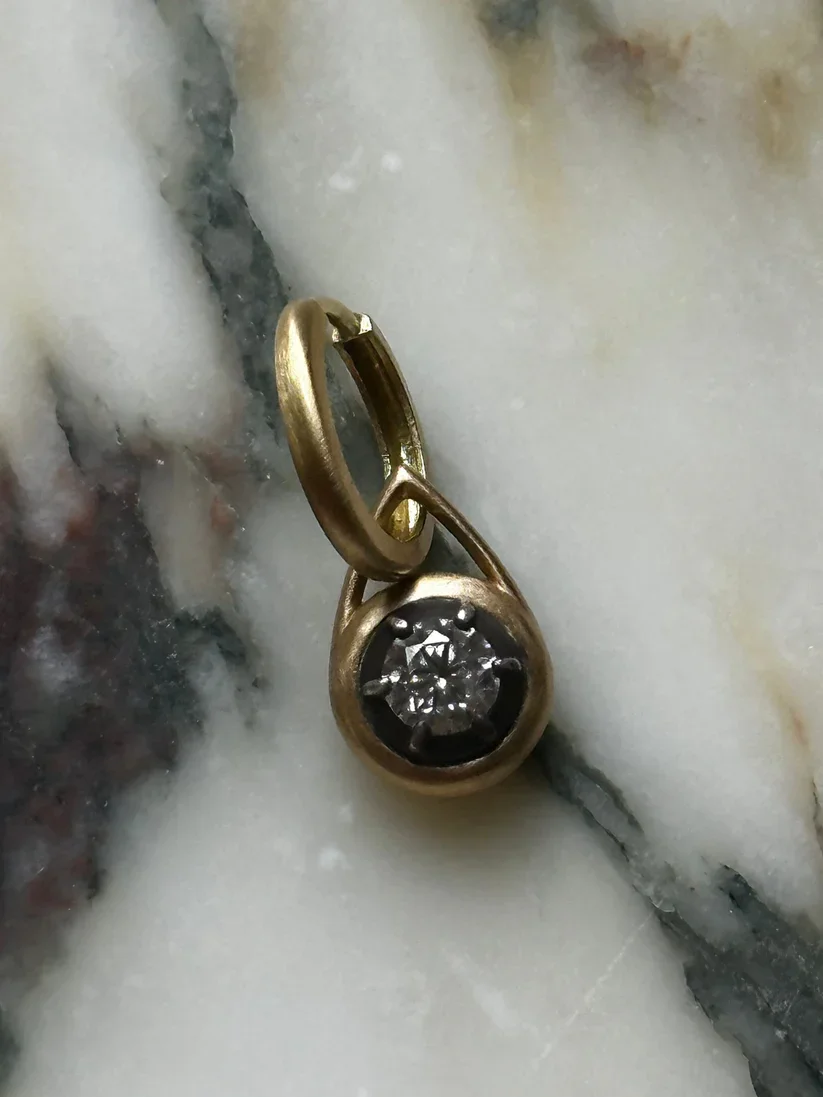
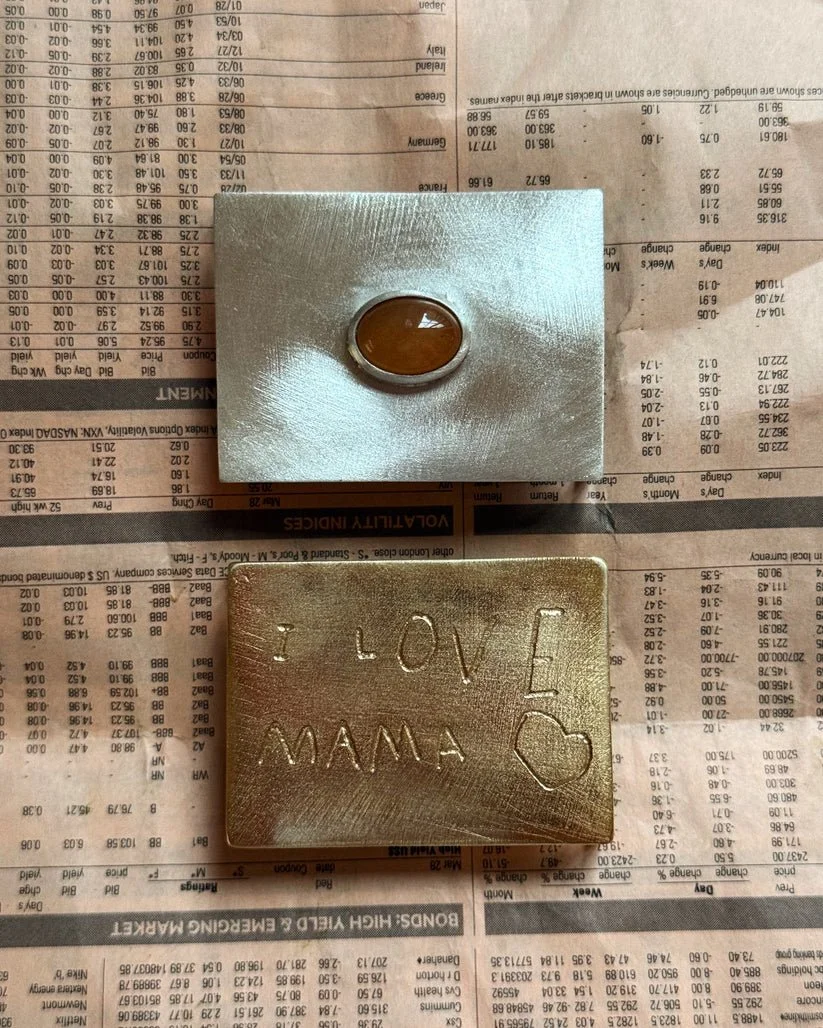
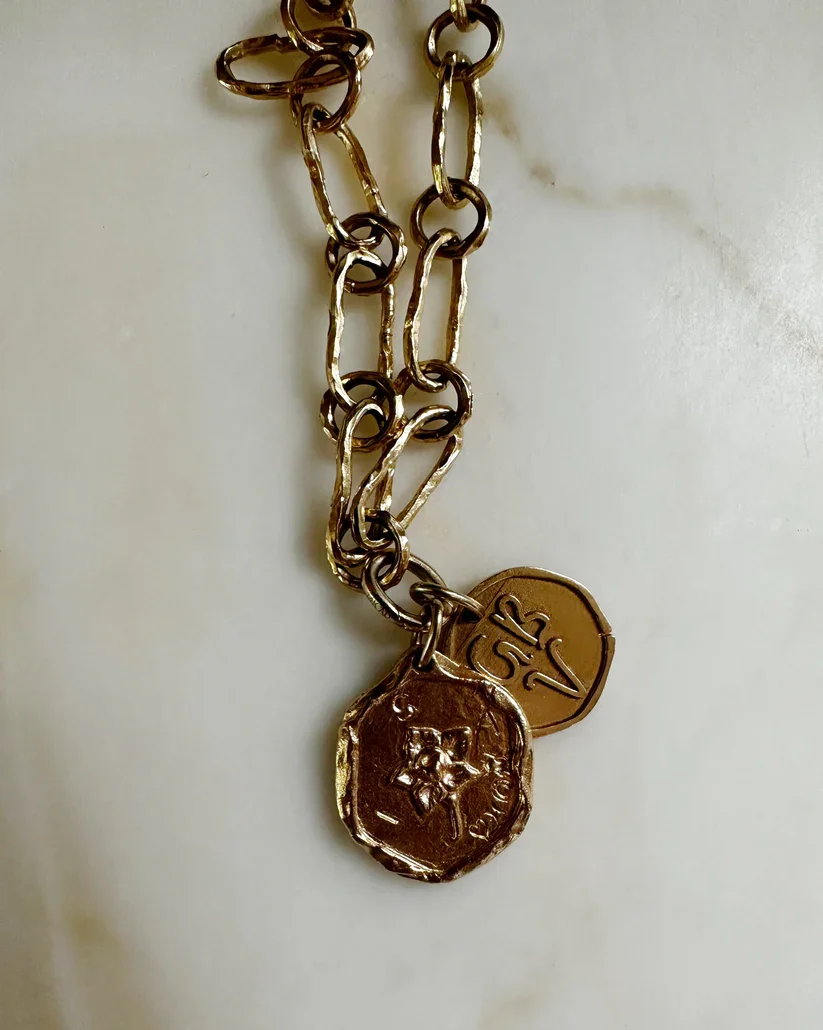
Pictured above, Kaja’s works (L-R): Emerald East West Ring, Laila Earrings, Luz Matchbox Cover, Athena Charm. To see more of Kaja’s jewellery designs, made in Toronto, visit kajaerikajorgensen.com or follow along on Instagram.